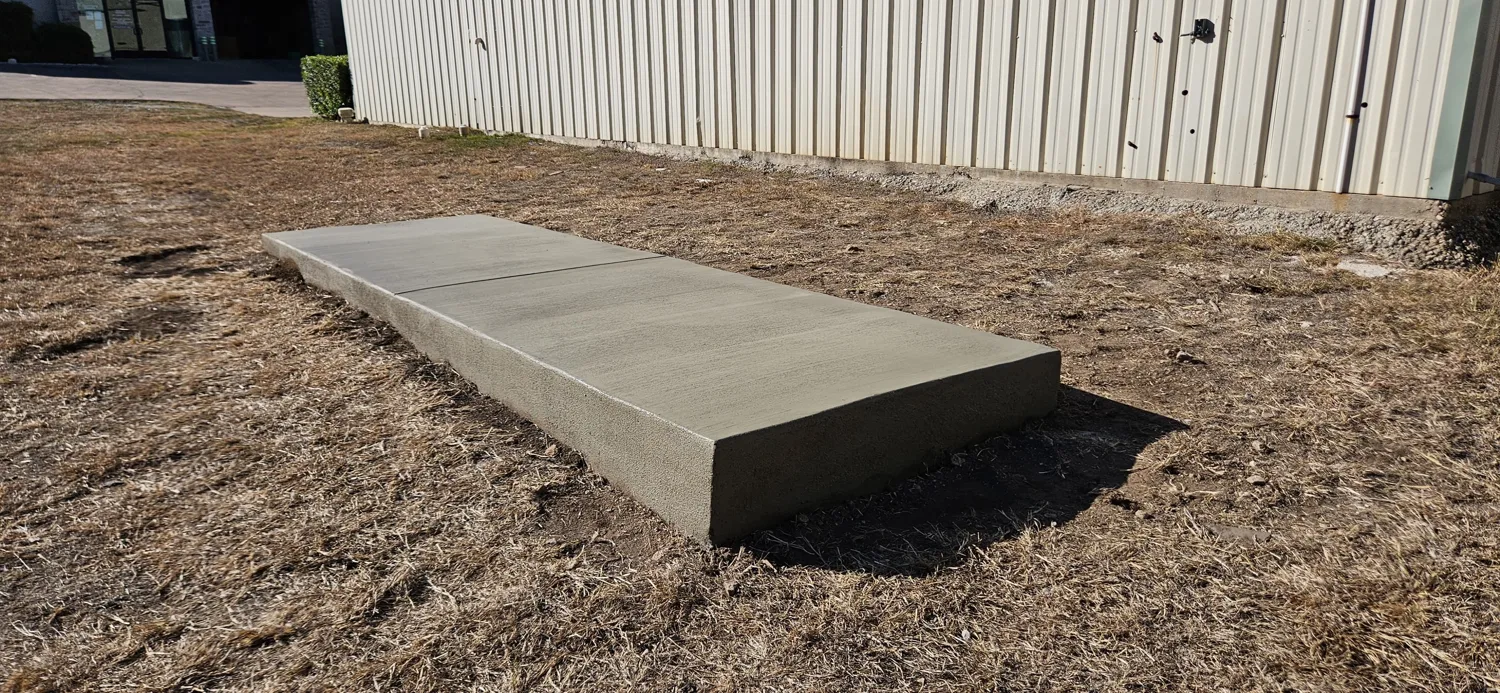
How much does a concrete slab cost in Port St. Lucie?
What a pad costs hangs on the load it carries and the sand below it: reinforcement chosen for the use, a subgrade rolled and keyed to a high seasonal table, and a grade that throws water clear. To set a marker, most pads and slabs open somewhere near $7 to $13 per square foot, moving with depth and whether a vapor barrier is part of the build. We measure and price each one against the weight that pad has to bear.
What reinforcement goes in a slab here?
On most residential pads we run structural fiber through the mix and welded wire mesh across the slab, the way flatwork is reinforced up and down the Treasure Coast. When the weight turns serious or structural, a shop floor carrying trucks for instance, we bring in a steel rebar mat, which is precisely what rebar is made to do. We fit the reinforcement to the load that is actually coming rather than burying steel in a light pad where it just invites corrosion this close to the coast.
How thick does my slab need to be?
The load decides it. A shed pad carries a tiny fraction of what a garage or a shop floor full of vehicles and gear puts down, so we tie depth and reinforcement to your actual use and factor in the loose sand and shallow seasonal table underneath.
Will a slab hold a hot tub, RV, or boat?
Yes. Each of those is a heavy, point-loaded use, so we add depth and reinforcement and bring in rebar where the weight truly warrants it. A boat or RV pad and a spa also want a level base that will not budge as the sand wets and dries, so drainage carries as much weight as the steel here. Give us the equipment and we build the pad around it.
Do I need a vapor barrier under the slab?
For enclosed or conditioned slabs, generally yes, since a shallow seasonal table and damp Treasure Coast ground drive moisture up through concrete. We base the decision on how the slab will be used.
Does a concrete slab require a permit?
Some do, hinging on size, placement, and use, and the requirements shift between Port St. Lucie and St. Lucie County, with closer review near the flood-drainage zones lining the canals. We call out a likely permit early so it is squared away before the work starts rather than turning up midway through.